Moisture in a chimney is often only noticed once visible signs have already appeared. Damp patches, discolouration of the masonry or an unpleasant smell can be early indications that condensation is forming inside the chimney.
How does condensation form in a chimney?
When wood, pellets, gas or heating oil are burned, water vapour is produced as part of the combustion process. This is normally carried outside through the chimney along with the flue gases.
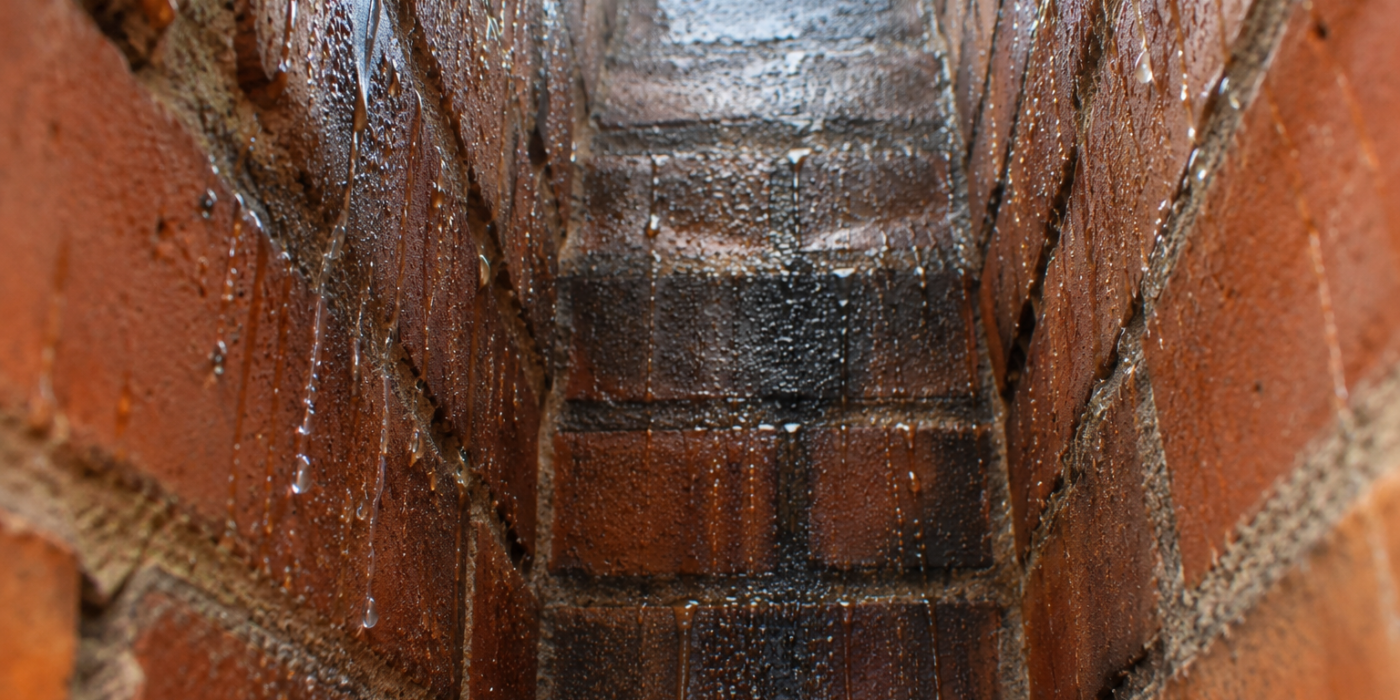
If the flue gases cool down too much, the water vapour they contain can condense. The vapour turns into liquid water, which can collect on the inner walls of the chimney.
Older masonry chimneys are particularly susceptible to this problem if they are not designed for the flue gas temperatures of the connected heating appliance.
Why are older chimneys particularly vulnerable?
Older heating systems often operated with significantly higher flue gas temperatures than modern appliances. Chimneys were designed accordingly.
When an older heating system is replaced with a more efficient model, the flue gases entering the existing chimney are often considerably cooler.
If the chimney cross-section is too large or the masonry is particularly cold, the flue gases may cool down enough inside the chimney for condensation to form.
Insufficient insulation, unfavourable operating conditions or an unsuitable chimney cross-section can also contribute to condensation forming.
What damage can condensation cause?
A masonry chimney that is not designed for wet operating conditions can suffer damage from persistent condensation.
Possible signs include:
-
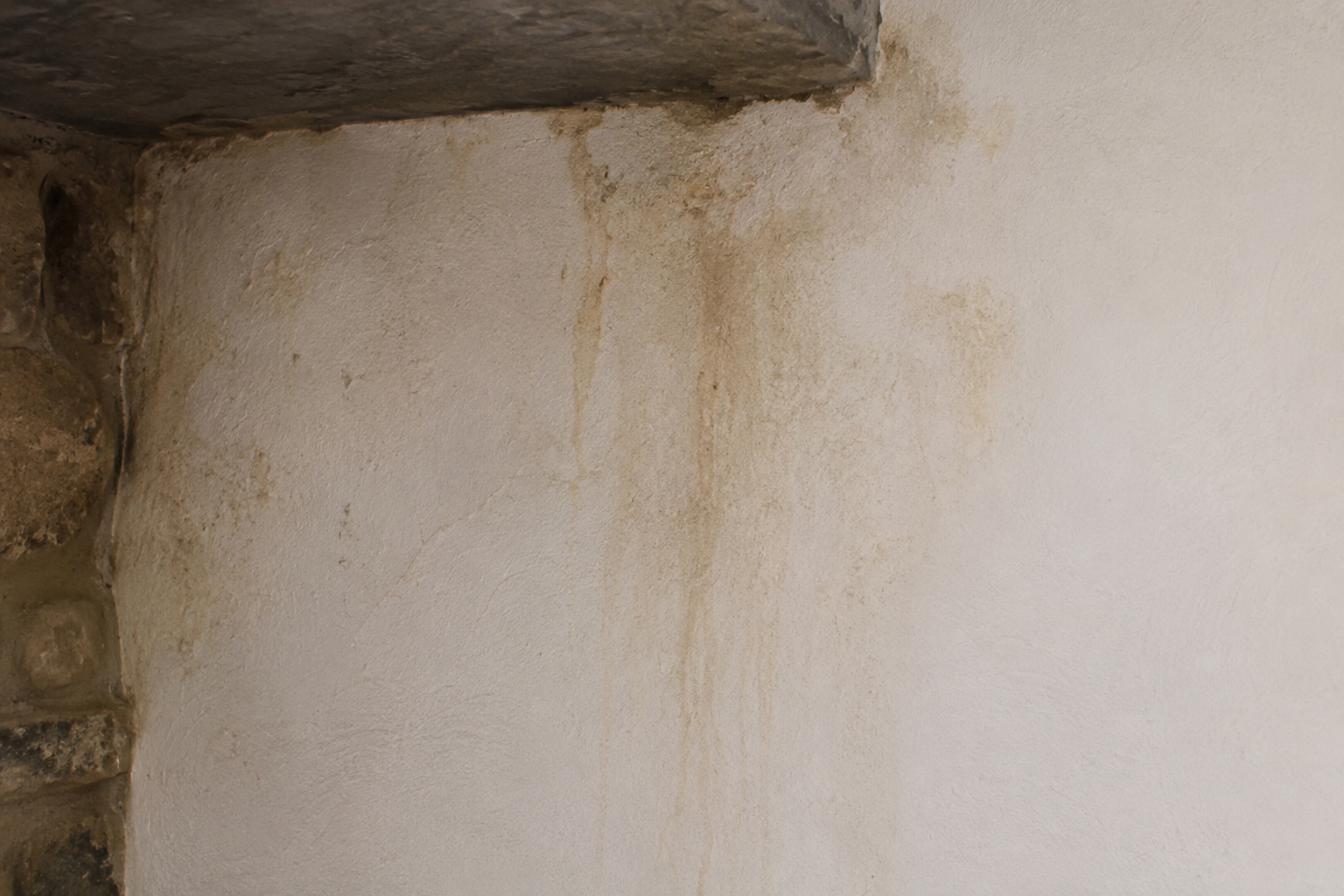
Damp patches on the chimney masonry
-
Yellowish or brownish stains
-
Flaking plaster or damaged mortar joints
-
Unpleasant odours
-
Moisture penetrating adjacent walls
The situation becomes particularly problematic when moisture penetrates the masonry along with substances contained in the flue gases.
This can lead to a condition known as chimney saturation, where moisture and combustion residues penetrate the masonry. It can cause lasting damage and become noticeable through stains or unpleasant odours.
However, not every damp patch on a chimney is caused by condensation. Rainwater entering the chimney or damage to the chimney cap may also be responsible.
How can the problem be resolved?
The most suitable solution depends on the cause of the problem and the condition of the existing chimney.
In many cases, installing a suitable chimney liner can provide a long-term solution.
A flue system adapted to the heating appliance is installed inside the existing chimney. Depending on the installation, stainless steel or plastic flue systems may be used.
These systems can be designed to suit the specific flue gas temperatures and operating conditions. In installations designed for this purpose, any condensation that forms is drained away in a controlled manner.
Important: Not every chimney showing signs of moisture necessarily requires renovation. The first step is to identify the source of the moisture and check whether the existing flue system is suitable for the connected heating appliance.
Our advice: Have signs of moisture checked early
Damp patches or discolouration on the chimney should not simply be painted over or covered up.
This may hide the visible signs of the problem, but it does not eliminate the underlying cause.
A professional inspection can help identify the cause of the moisture and determine whether a repair, an adjustment to the flue system or a complete chimney renovation is necessary.
We can assist you with inspecting existing chimneys and planning suitable renovation measures.
This helps ensure that the chimney and heating appliance are technically compatible.