
Chimney renovation
Relining, code compliance, full refurbishment – we give old flues a safe second life.
Every renovation ends with a compliance check and the paperwork you need.
All our services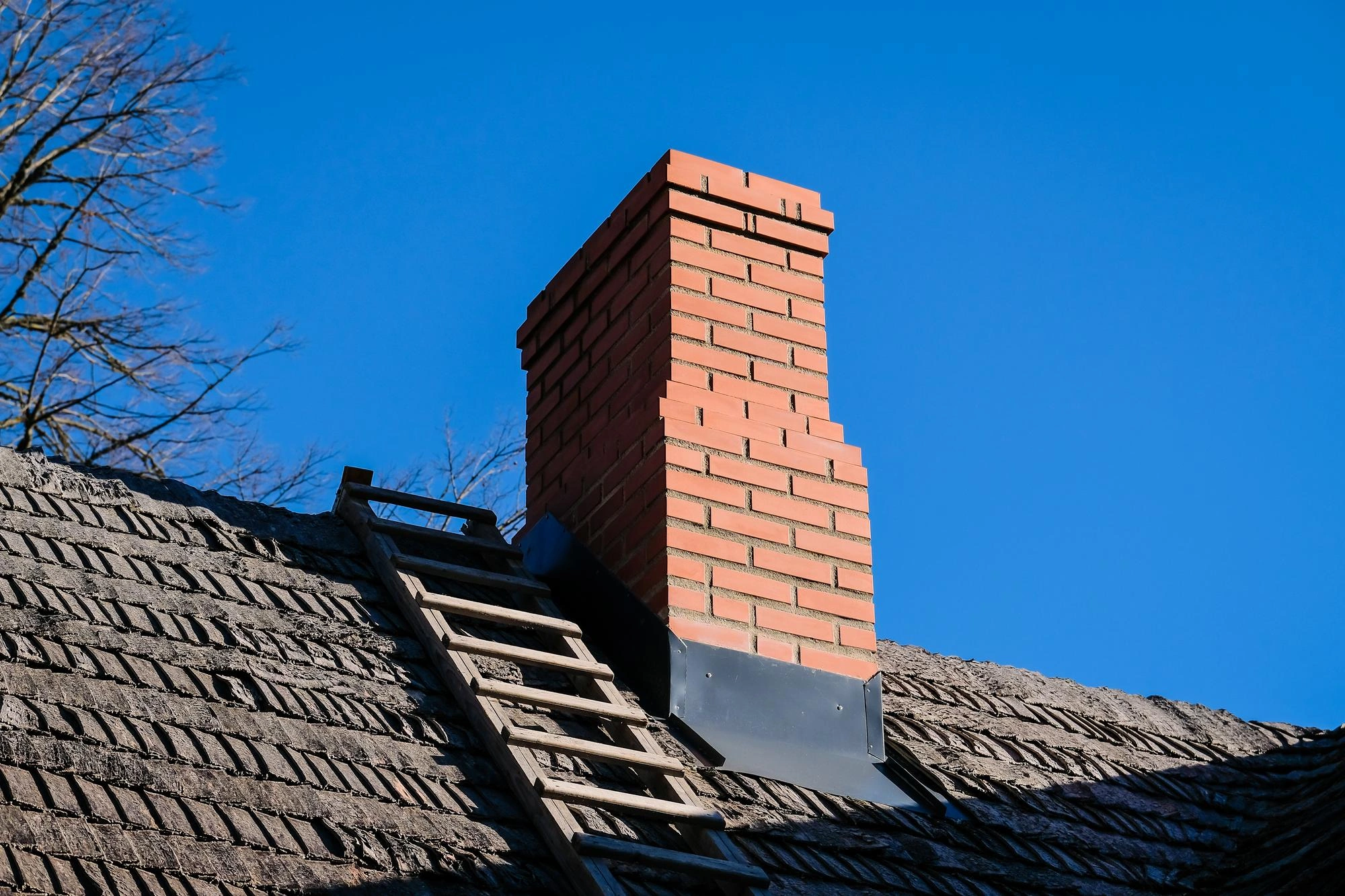 A RELINED FLUE, A SECOND LIFE
EVERY RENOVATION INCLUDES
Survey before quote
We inspect the flue before pricing the work.
System chosen on site
Matched to the appliance, the fuel and the building.
Fixed price, agreed
No surprises once the job has started.
Material lifted outside
Baulift equipment, not your stairwell.
Compliance check
And the paperwork you need, at the end.
An old flue can be brought back to standard
A flue that no longer meets today’s requirements does not have to be rebuilt from scratch. Stainless relining, sealing and reworking the head are usually enough to bring the installation back to a safe, compliant state.
We survey the existing flue first, explain what it needs in plain words, and only then quote the work. No surprises once the job starts.
01 The system follows the building
A safe, reliably functioning chimney has to suit both the heating system and the building itself. Before any renovation, we inspect the existing chimney and then select the system best suited to it technically.
We carry out renovations using plastic flue systems, stainless steel systems and external wall chimneys. Which system we use depends on the heating appliance, the fuel and the structural conditions of the building.
02 Plastic flue systems
Plastic flue systems are particularly well suited to modern heating installations with low flue gas temperatures, such as gas and condensing boilers. They are highly resistant and lightweight, which makes them especially suitable for retrofitting into existing chimney shafts.
03 Stainless steel systems
Stainless steel systems are a versatile and durable solution for a wide range of appliances and heating systems. They are suitable both for renovating existing chimneys and for building new flue systems.
Depending on the structural situation and the requirements involved, we use either single-wall or double-wall stainless steel systems. Their robust construction and high temperature resistance make them particularly suitable for solid-fuel appliances such as wood and pellet stoves.
During a renovation, a stainless steel liner can be installed inside an existing chimney shaft. This often means the existing chimney can continue to be used, without having to build an entirely new system.
We select the right system based on the specific structural conditions of your building.
04 External wall chimneys
Where there is no suitable chimney in place, or where renovating the existing one doesn’t make technical or structural sense, a double-wall external wall chimney offers a flexible solution. The flue system is installed on the outside wall of the building, which means it can be retrofitted for a wood-burning stove, a pellet stove or a heating system.
We take into account both the individual characteristics of your building and the requirements of the planned appliance. Every building is different – which is why every project begins with a personal, individual consultation. Together we discuss the requirements, the structural possibilities available and the optimal positioning of the chimney.
We advise you on the technical design, the routing of the system and the connections required. Throughout, we make sure the chimney is not only technically correct but also fits harmoniously into the appearance of the building – for example through finishes in a range of colours.
From individual consultation and planning, through selecting the right system, to professional installation, we guide your project from a single source. The result is a safe, long-lasting solution tailored to your needs.
05 Chimney masonry repair
Chimney renovation isn’t always limited to the flue system itself. Over the years, chimney masonry can also be damaged by weather and moisture. In older chimneys in particular, bricks, joints or individual sections of masonry can lose their original strength.
Where the structural fabric has been affected, we inspect the area concerned and determine what work is required. If the masonry is already damaged, we can dismantle the chimney back to sound, load-bearing material and then rebuild it properly.
Damaged bricks and joints are removed entirely and replaced with suitable new masonry. This restores not only the appearance, but above all the stability and long-term performance of the chimney.
Here too, we advise you individually and assess on site which solution makes sense and will last for your chimney.

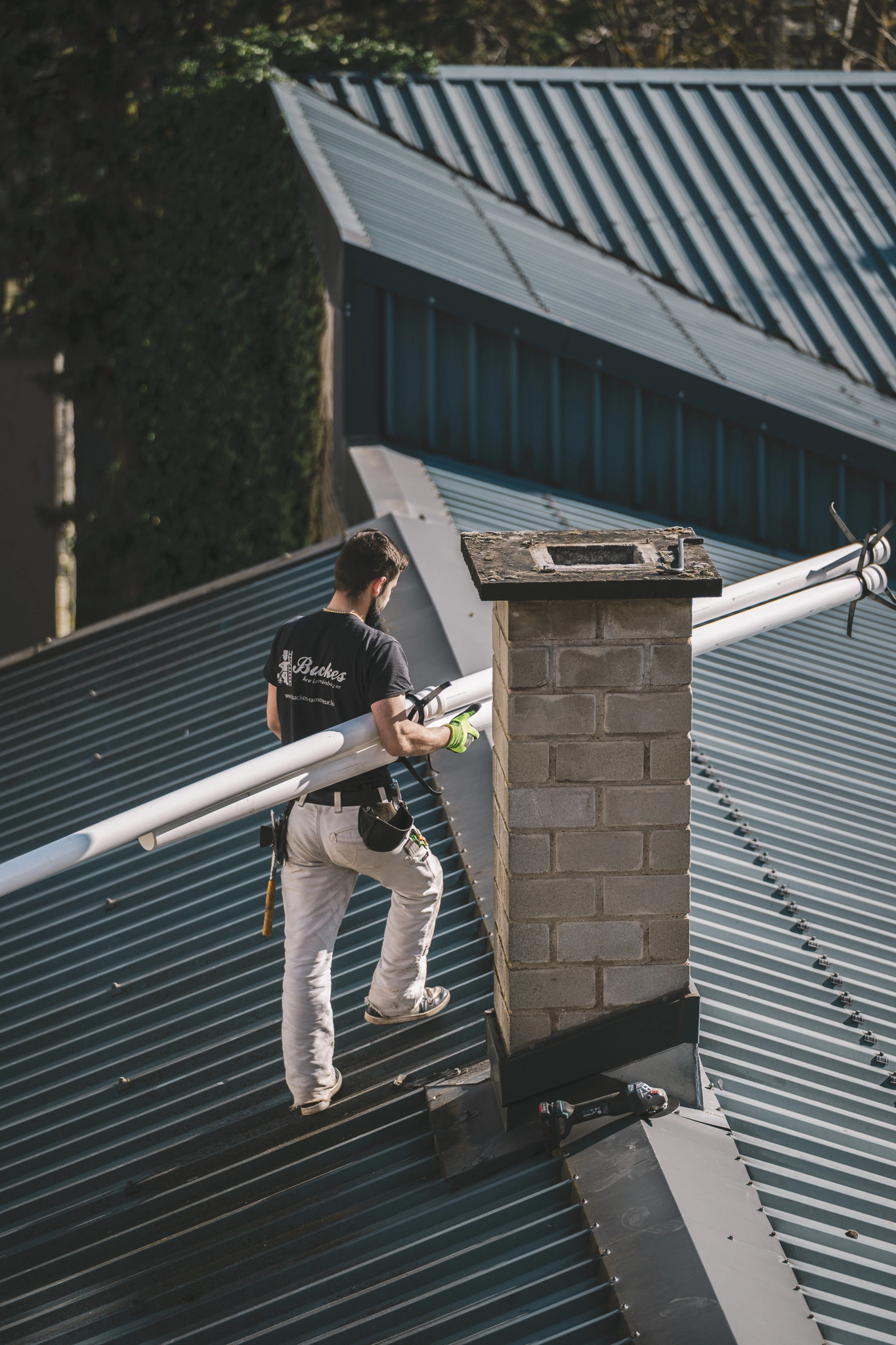
A chimney renovation often means bringing heavy materials onto the roof – pipes, masonry, cladding and tools. When access through the building is not possible or would involve considerable effort, we work together with Baulift.
Their lifting equipment transports the materials directly to the roof from outside. This keeps your rooms and stairways free from construction traffic, makes the work easier and helps keep the site cleaner.
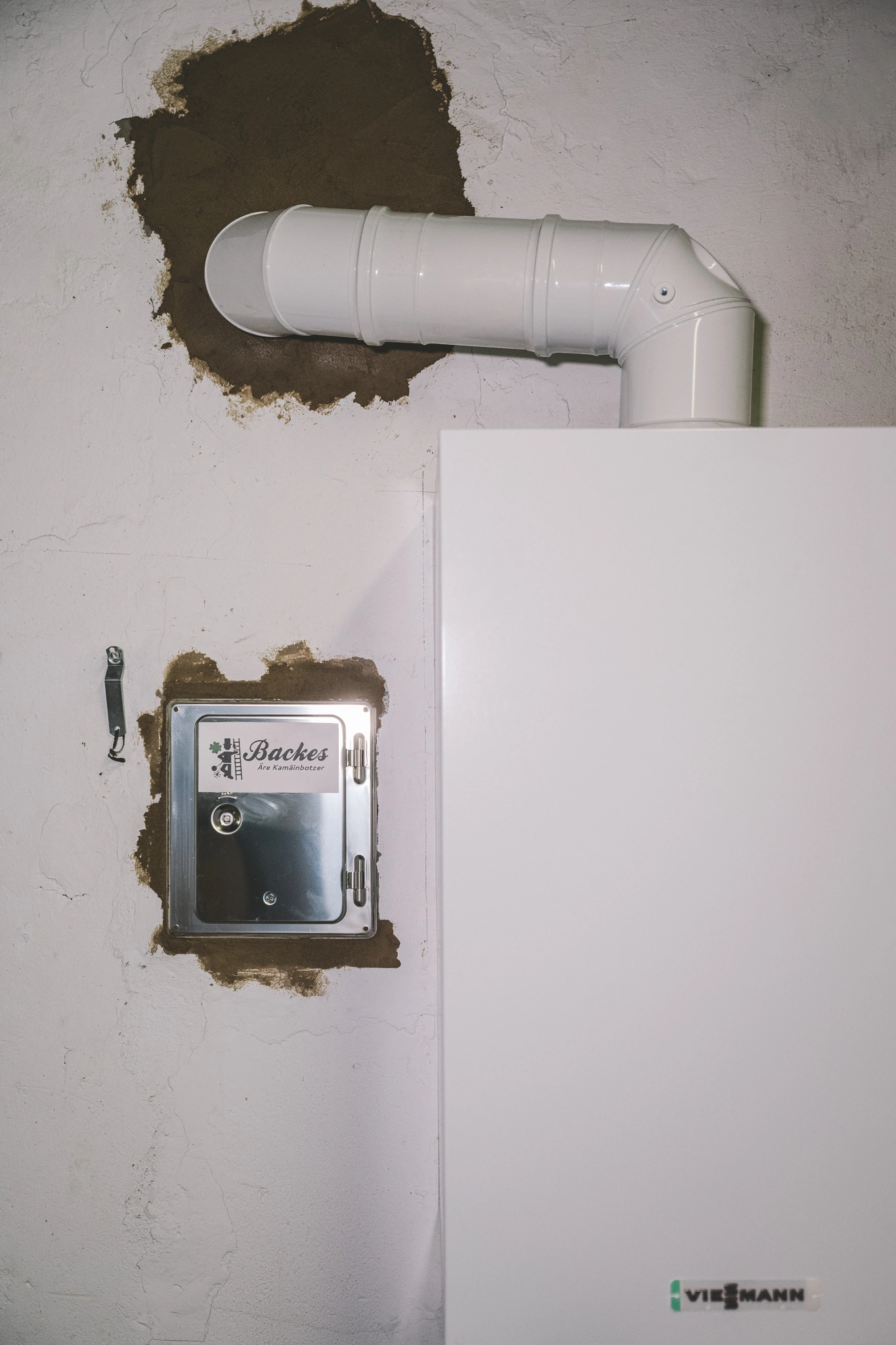
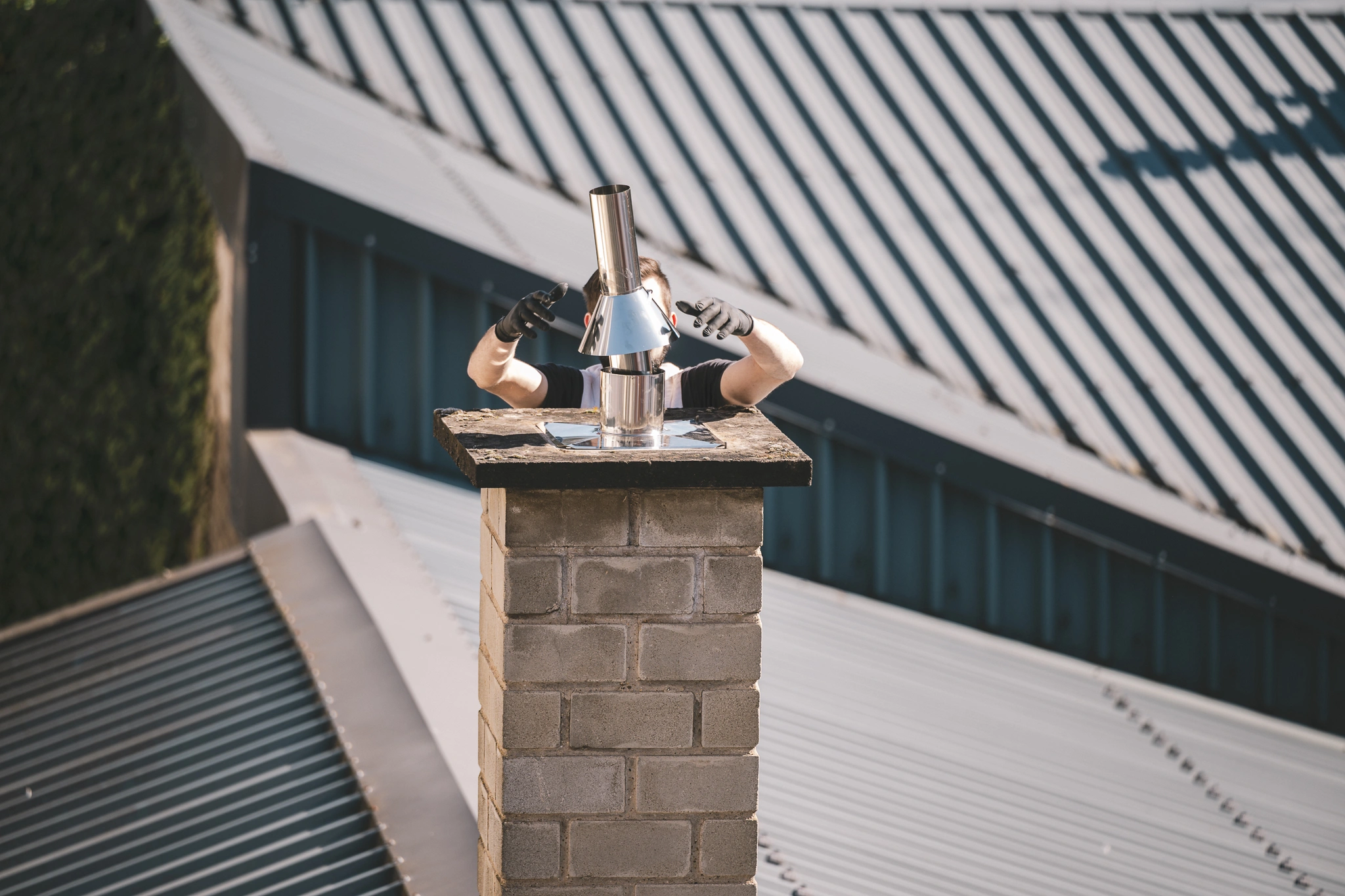
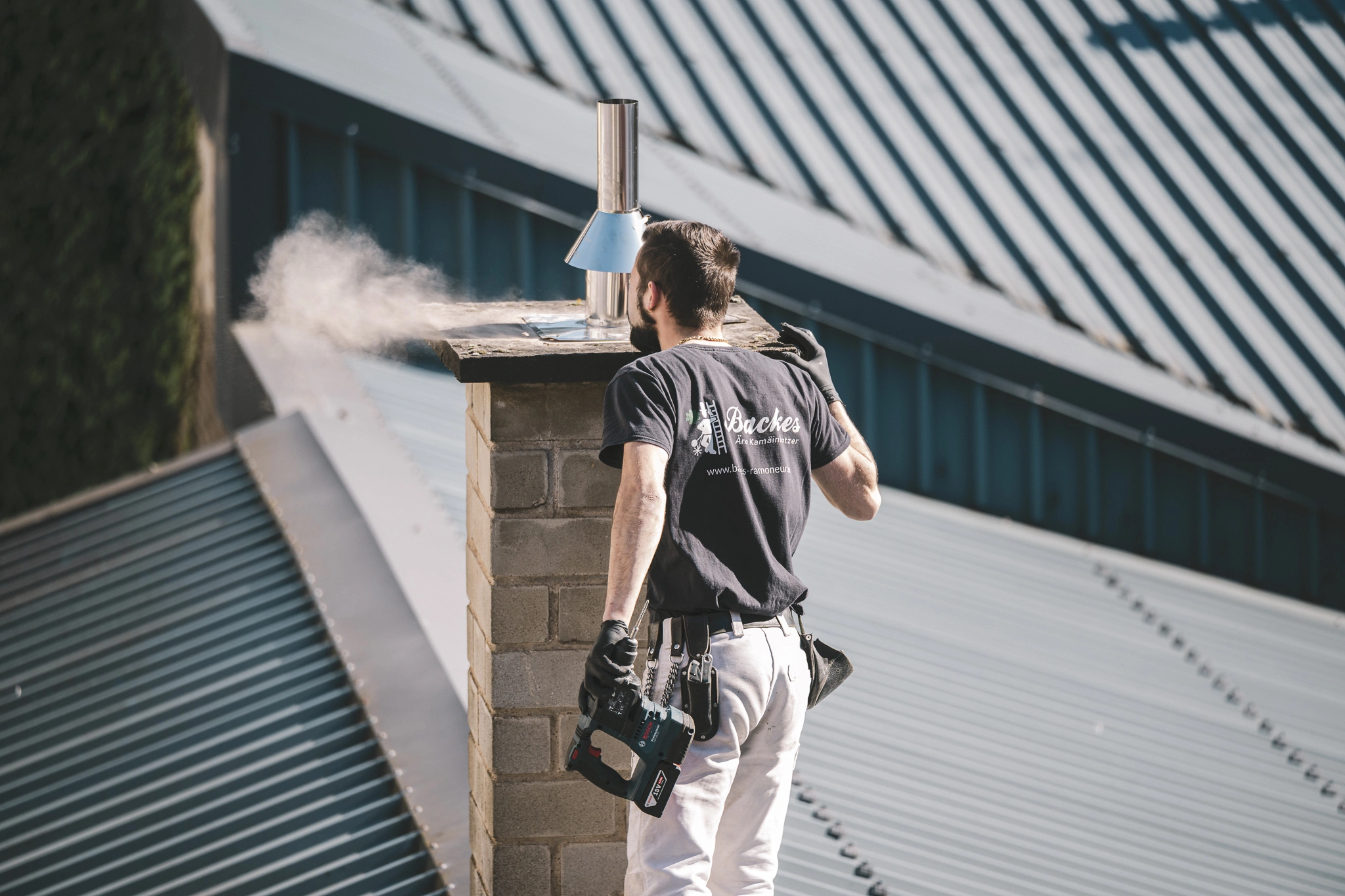
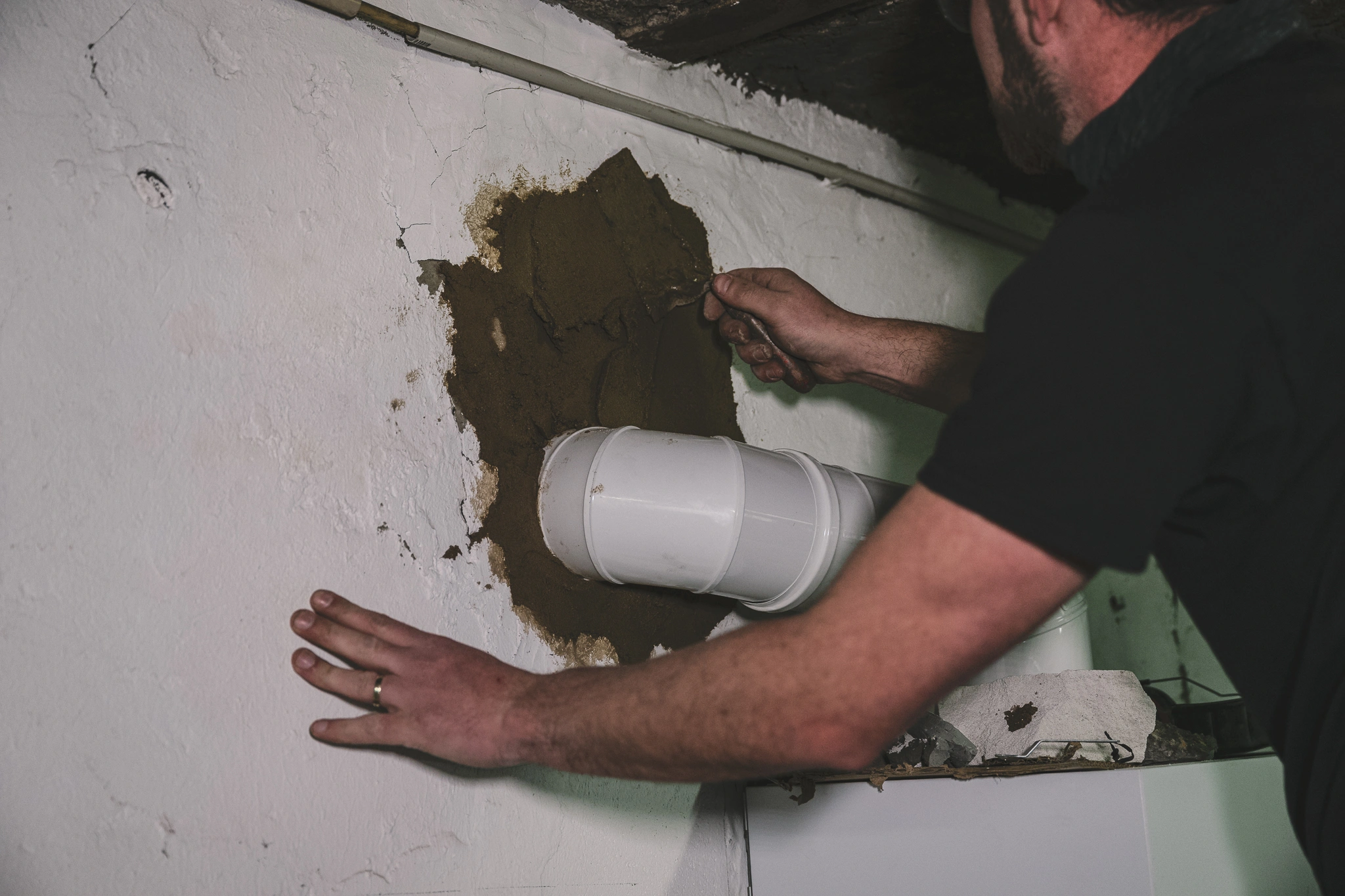
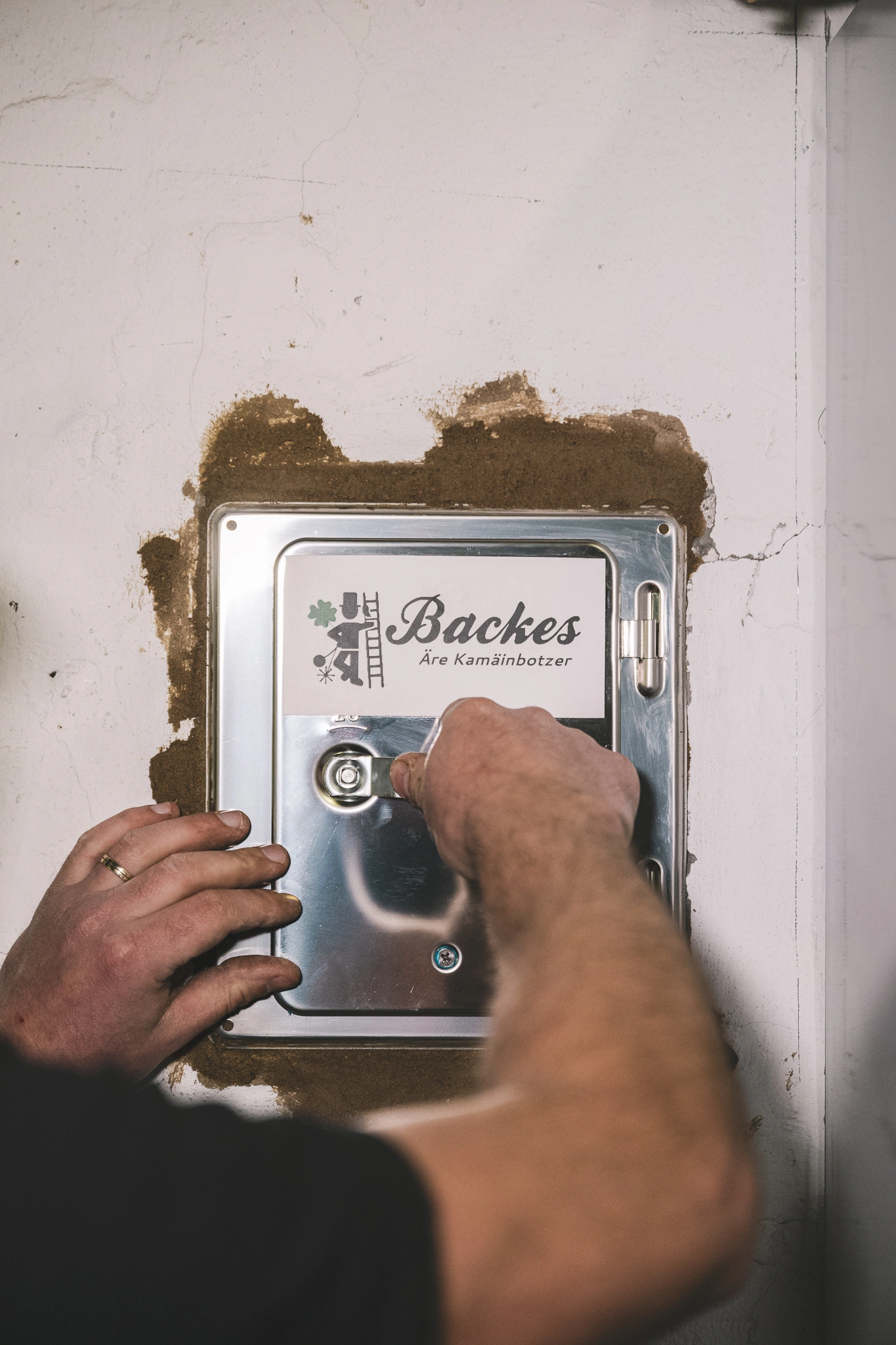
An old flue out, a new one down the same shaft
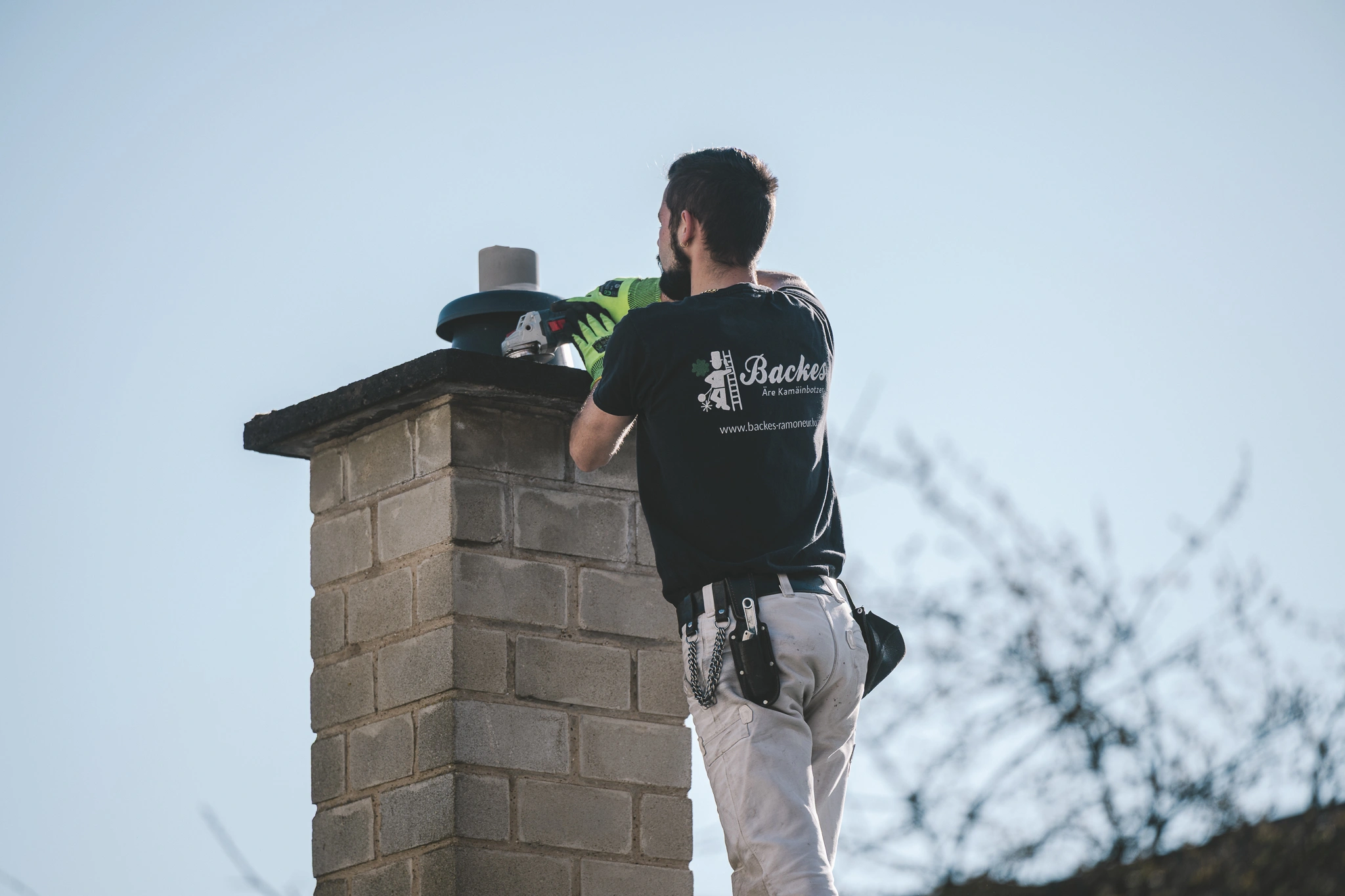
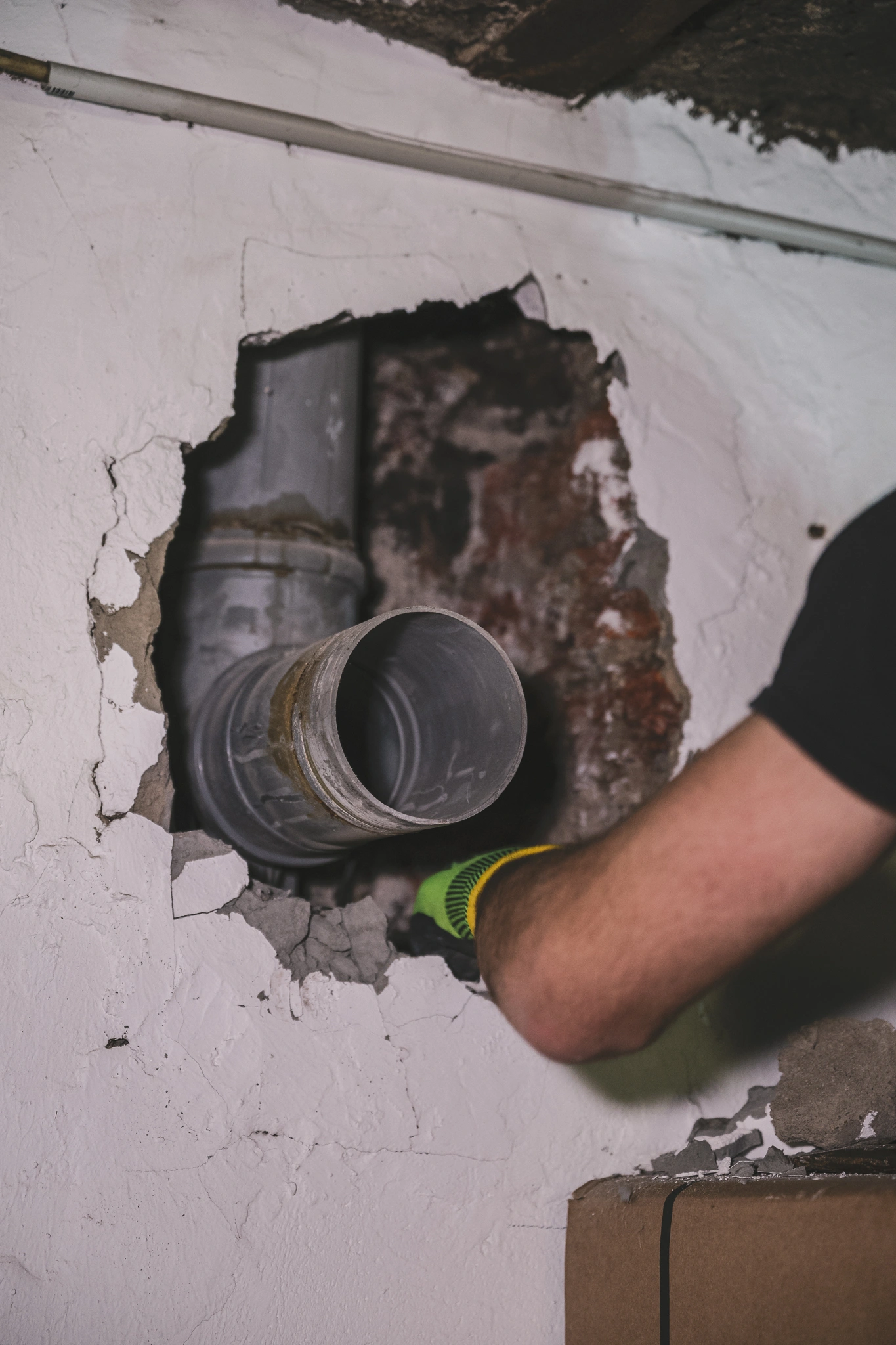
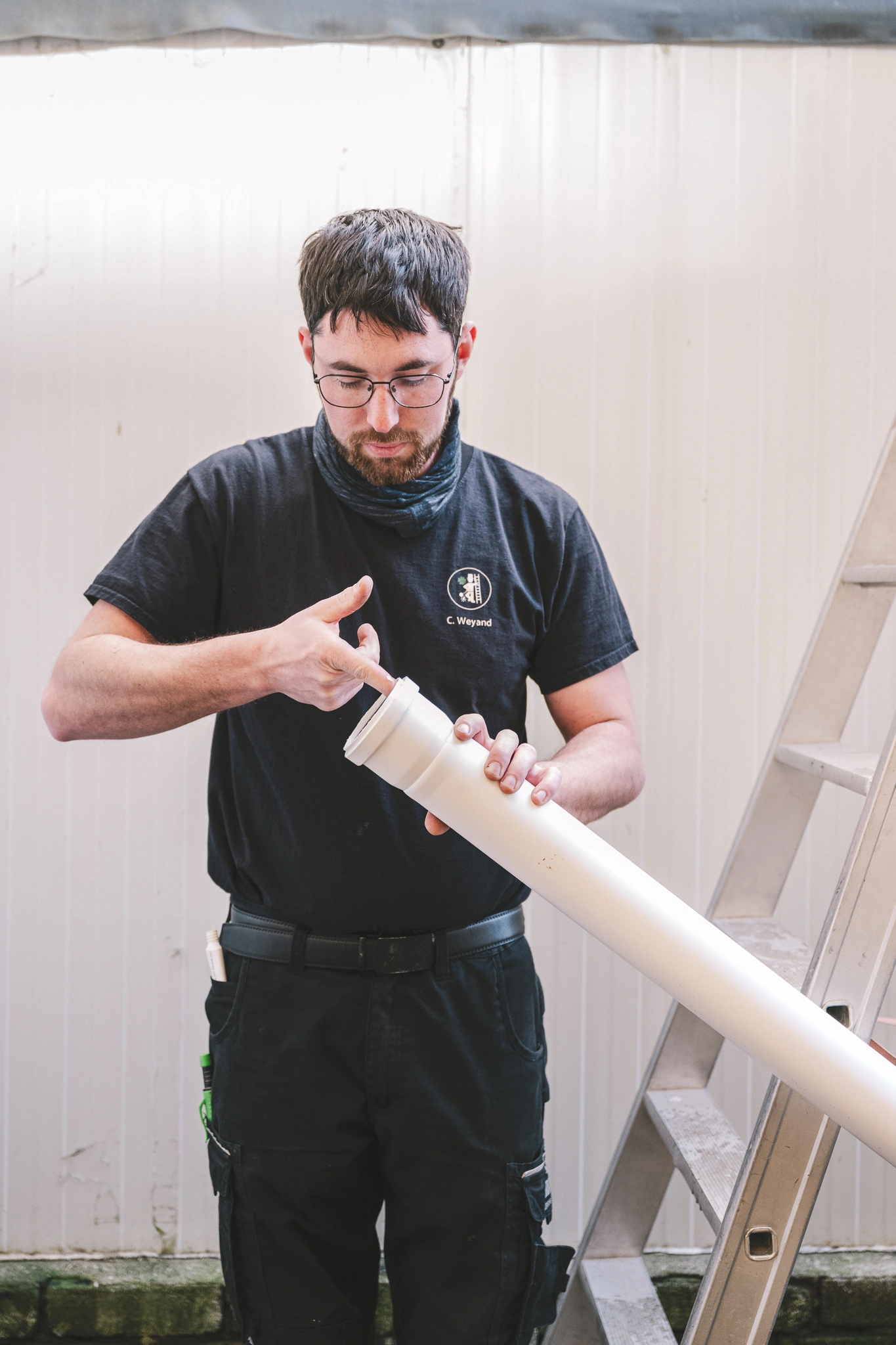
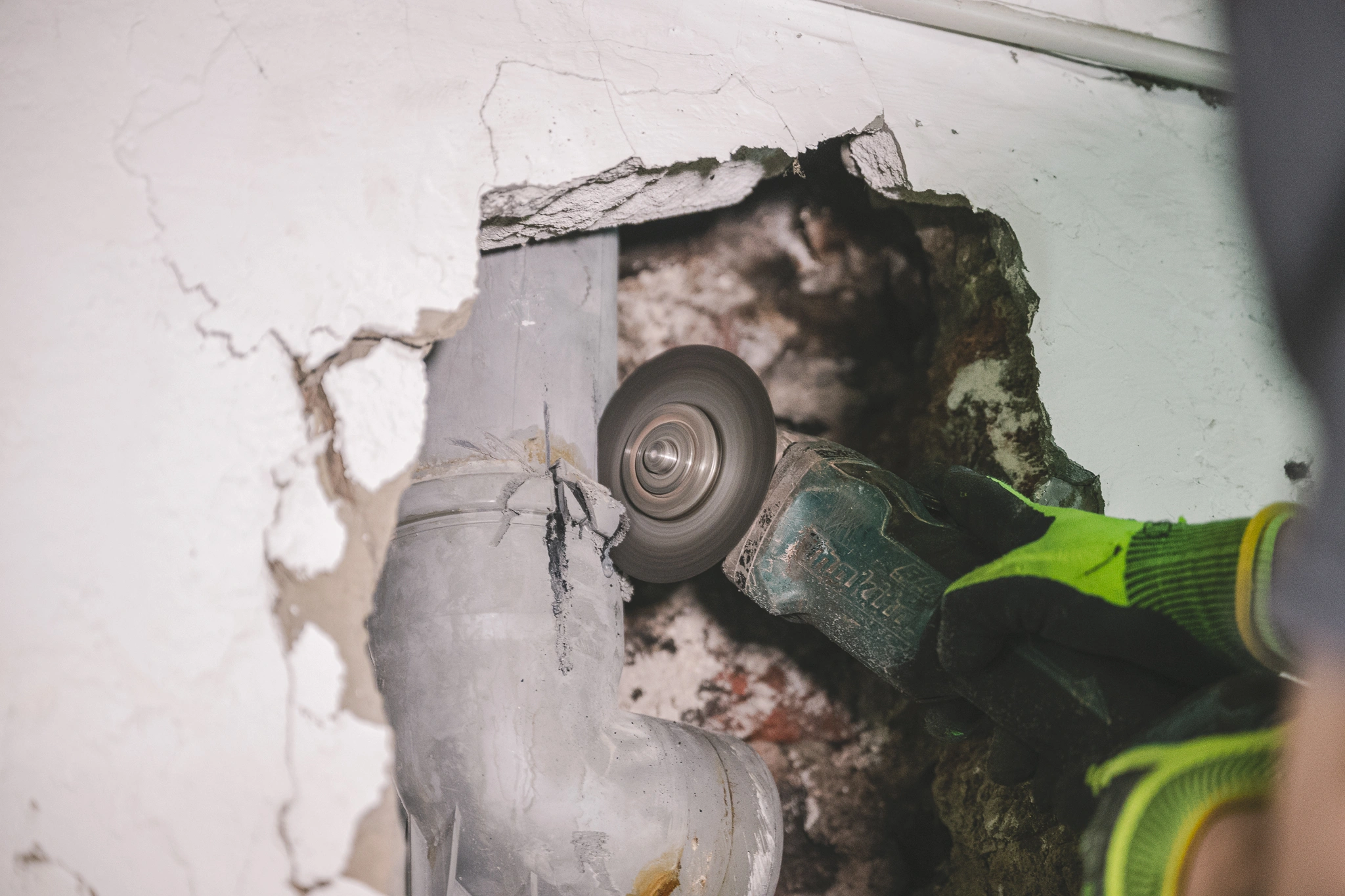
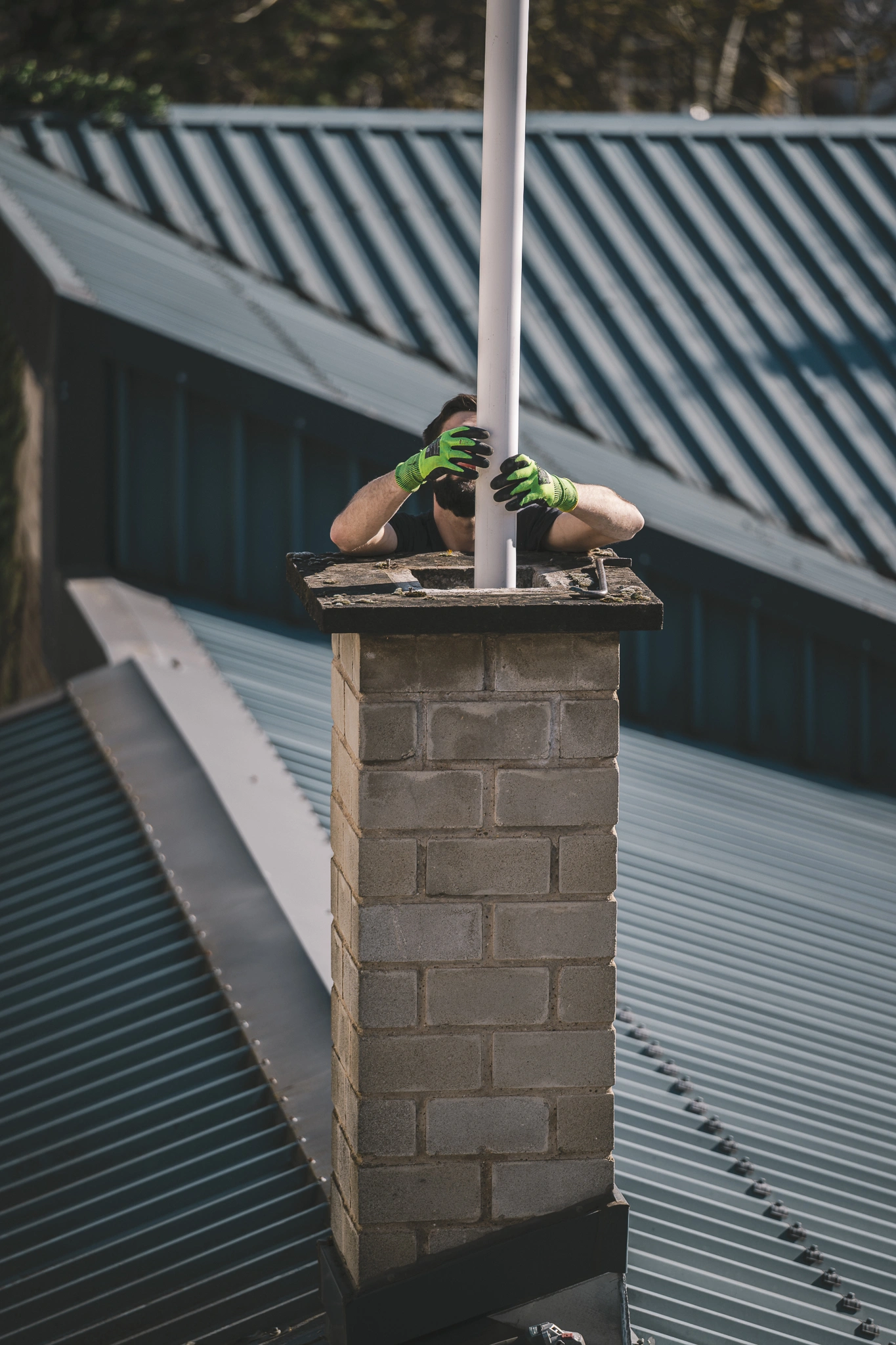
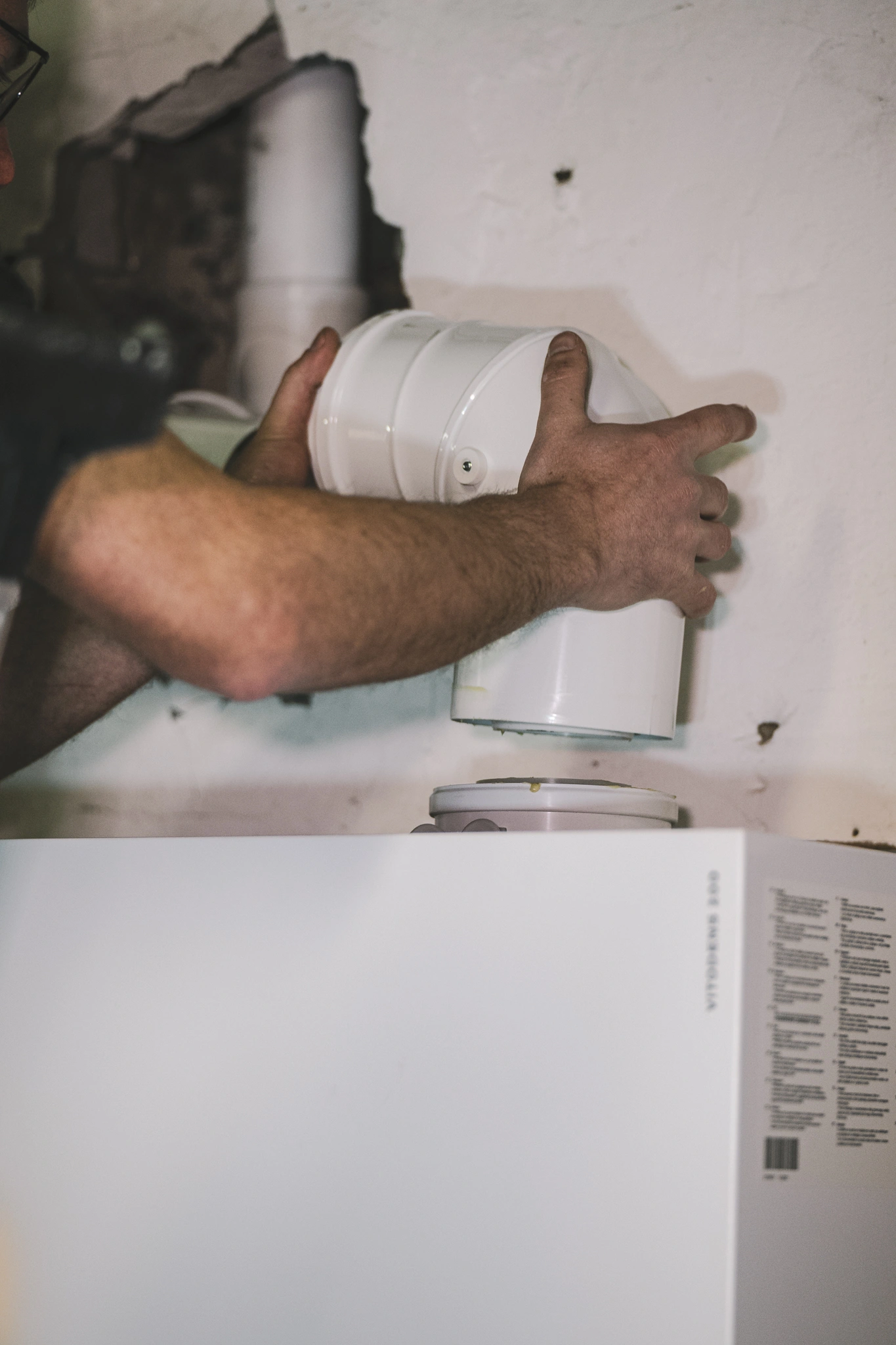
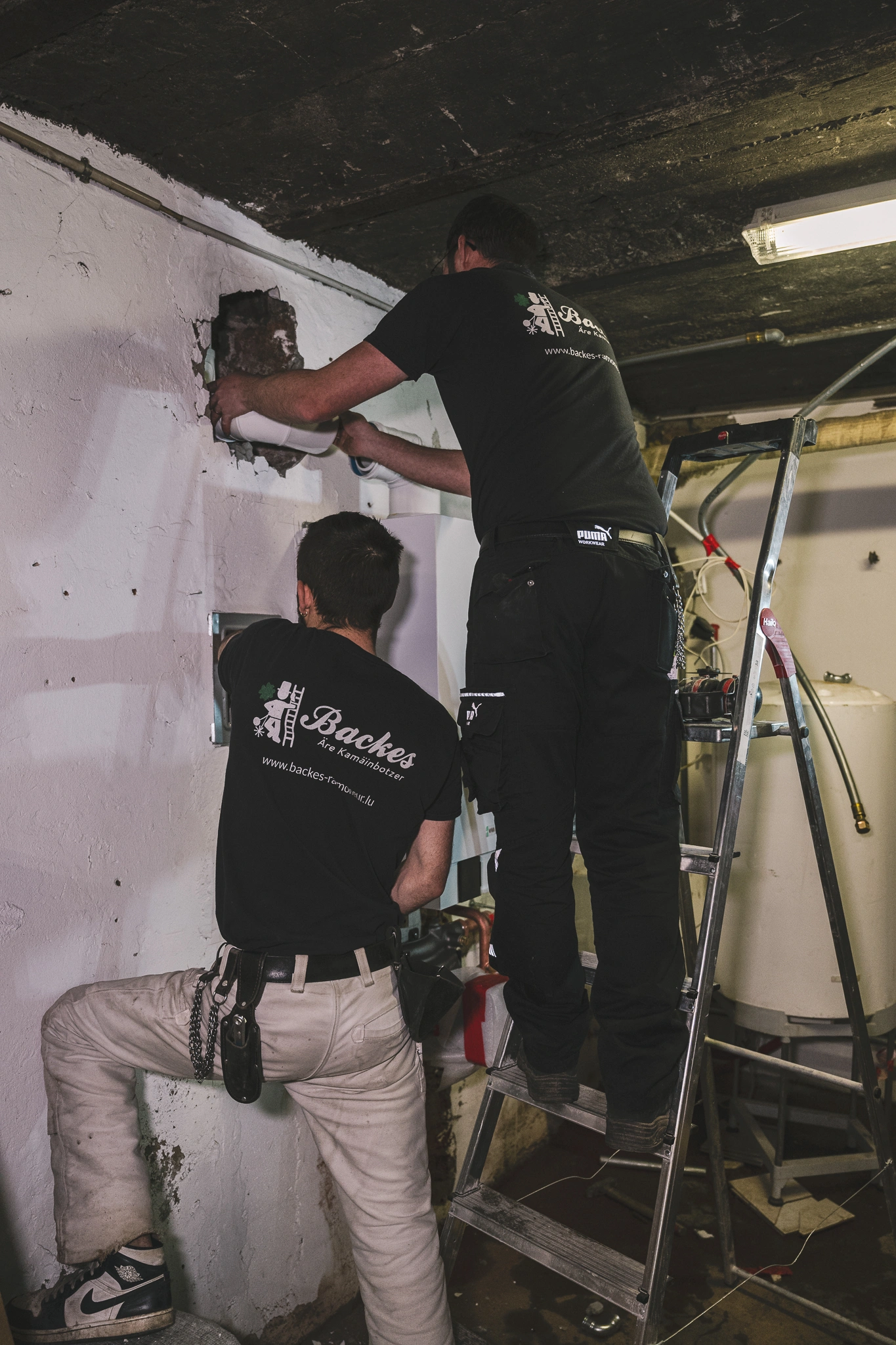
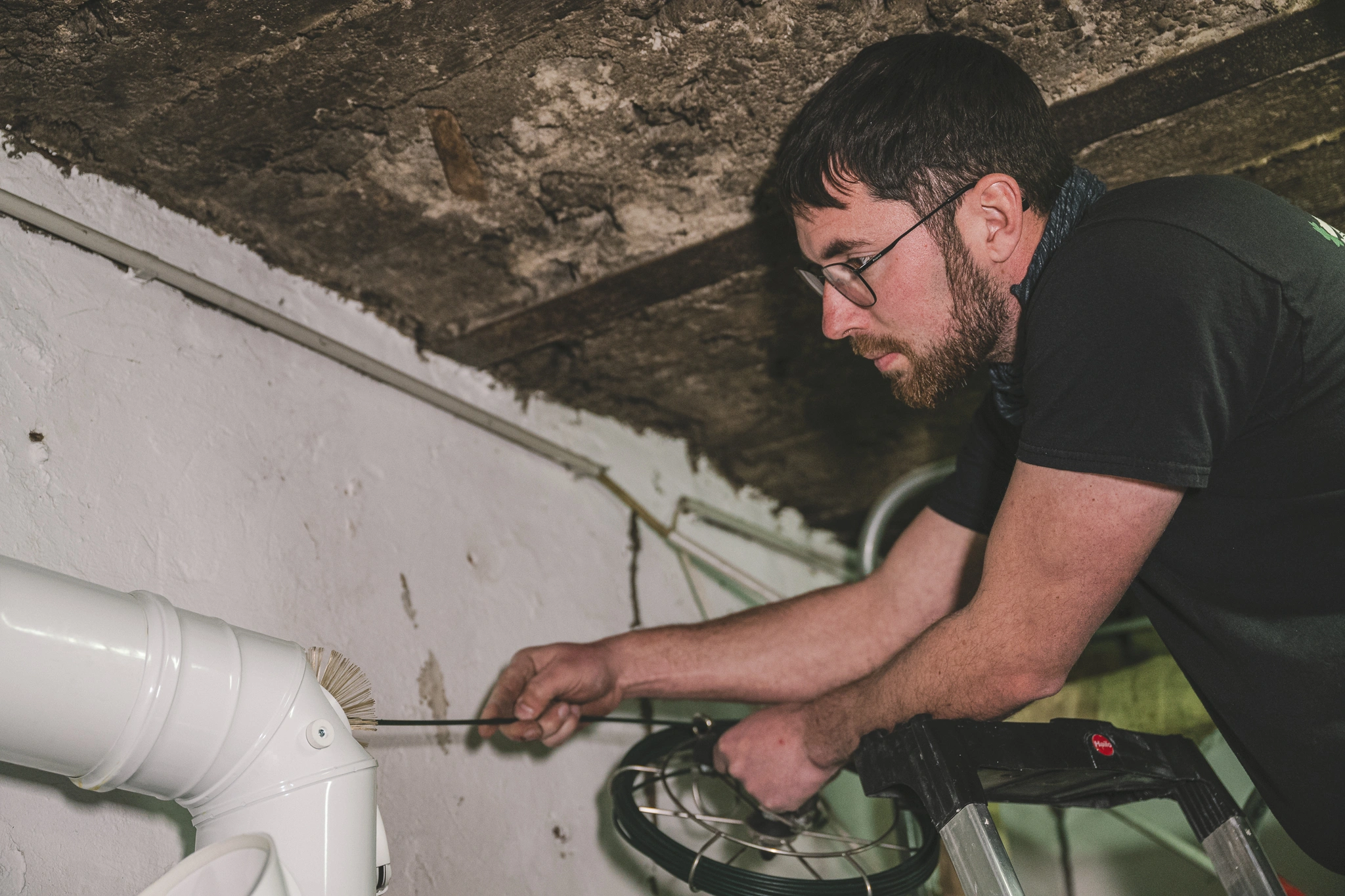
A gas condensing boiler in a cellar boiler room. The old pipework was cut out of the masonry, a plastic liner run down the existing shaft, and the connection and the inspection door made good – then the new flue was swept and checked before it was handed back.
Good to know
Another question? The simplest thing is to call us – we answer without jargon.
Rarely. A flue that no longer meets today’s requirements can usually be brought back to standard by relining it, sealing it and reworking the head – the existing shaft stays where it is. A full rebuild is the exception, and we would tell you after the survey rather than before it.
The flue gas temperature decides it. Plastic systems suit modern installations that run cool – gas and condensing boilers – and are light enough to retrofit into an existing shaft. Stainless steel takes the heat of solid fuel, so a wood or pellet stove goes to stainless, single-wall or double-wall depending on the situation.
In most cases no: the liner goes down the existing shaft, so the work stays at the top and the bottom of the flue. Where the masonry itself has failed we do have to reach it, and we can dismantle back to sound material and rebuild. Which of the two it is comes out of the survey, not out of a guess on the phone.
Then a double-wall external wall chimney is usually the answer. It runs up the outside of the building and can be retrofitted for a wood-burning stove, a pellet stove or a heating system. We look at the positioning, the routing and how it will sit against the facade – it comes in a range of colours for that reason.
No. Liners, bricks, cladding and tools go up the outside of the building on Baulift lifting equipment. Carried by hand it would be a procession through your stairwell and half a day gone before the work started.
A compliance check and the paperwork that goes with it. The price is agreed before the work starts, off the back of the survey, and it does not move once the job has begun.