Solar panels are sold as a “set it and forget it” investment — and for the most part, that’s true. But there’s one maintenance question that quietly affects how much your system actually earns back over time: how clean the panels are. Here’s what dirt and grime actually do to output, and why rain isn’t the solution people assume it is.
How much does dirt actually cost you?
The relationship between soiling and output isn’t small, and it isn’t linear either. A layer of dust or grime that blocks just 5% of incoming light can reduce a panel’s energy output by 10 to 25% — the loss compounds rather than following the dirt one-to-one. Across a full year, typical soiling losses average around 5%, but they range anywhere from 2% to 25% depending on the site, the climate, and how long a panel goes uncleaned.
On a home solar system, that’s not a rounding error. A system losing even 10% of its output over a full year is producing meaningfully less electricity — and, if you’re relying on that production to offset your bill, meaningfully less savings — than a clean one.
Why rain doesn’t solve the problem
It’s a common assumption that rain keeps panels clean, and to an extent, light dust does wash off. But rain is inconsistent, doesn’t fall at a useful angle on every roof pitch, and does very little against the buildup that actually matters most: pollen, tree sap, bird droppings, and the fine grime that settles during long dry spells. These substances don’t rinse away — they bake onto the glass surface and, over months, form a film that gradually dims the panel regardless of how much rain falls on it.
What builds up on panels over time
- Dust and airborne particles — accumulate steadily, especially near roads or agricultural land
- Pollen — seasonal but can form a sticky layer that then traps further dust
- Bird droppings — create localised shading that can disproportionately affect an entire panel string, not just the fouled cell
- Moss and organic growth — more likely at panel edges and on lower-pitched roofs where debris and moisture linger
Why professional cleaning is usually the better call
Cleaning solar panels yourself sounds simple until you’re the one on the ladder. A few real risks are worth weighing:
- Fall risk: panels are typically on a pitched roof, which is exactly the kind of surface where a DIY cleaning job goes wrong.
- Scratching the glass: the wrong brush, sponge, or cleaning product can leave fine scratches that reduce light transmission permanently — the opposite of what you were trying to achieve.
- Warranty conditions: some manufacturers specify approved cleaning methods; using the wrong approach can affect your warranty if damage occurs.
- Electrical safety: panels are live electrical equipment, even when the system is switched off at the inverter.
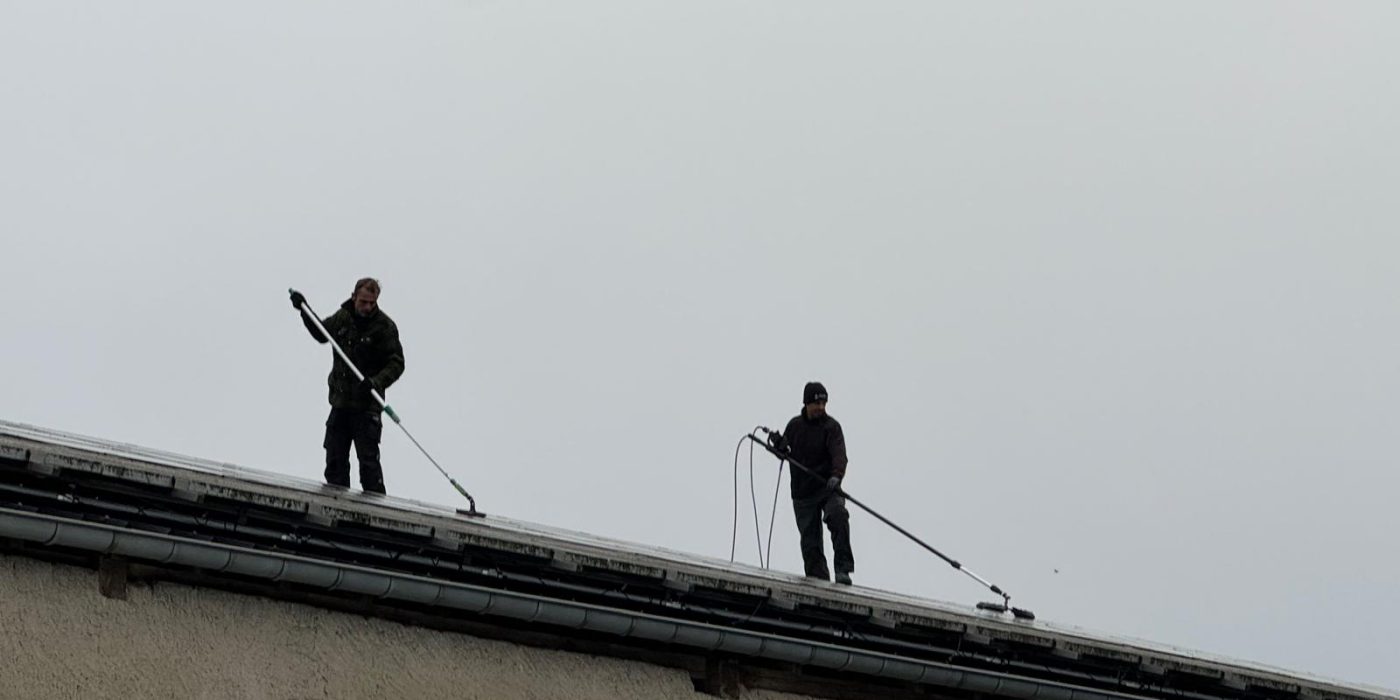
A professional clean uses the right equipment and technique to remove buildup without damaging the surface — which is what actually protects the investment you made in the system in the first place.
How often is cleaning actually worth it?
There’s no single answer that fits every roof — it depends on the panel’s tilt, its surroundings, and the local climate. As a general guide, an annual clean is a reasonable baseline for most homes, with more frequent cleaning worthwhile for flatter installations, properties near trees, or areas with heavier dust or pollen seasons. If you’ve noticed a drop in your system’s reported output compared to previous years, that’s often the clearest sign it’s time.
The bottom line
Solar panels are a long-term investment, and a clean surface is one of the few maintenance factors you actually control. Left uncleaned, a system can quietly underperform for months without anyone noticing — the panels still work, they just work less well than they should. A periodic professional clean is a small cost against the output it protects.
If it’s been a while since your panels were cleaned, or you’re not sure what condition they’re in, get in touch and we’ll take a look.